
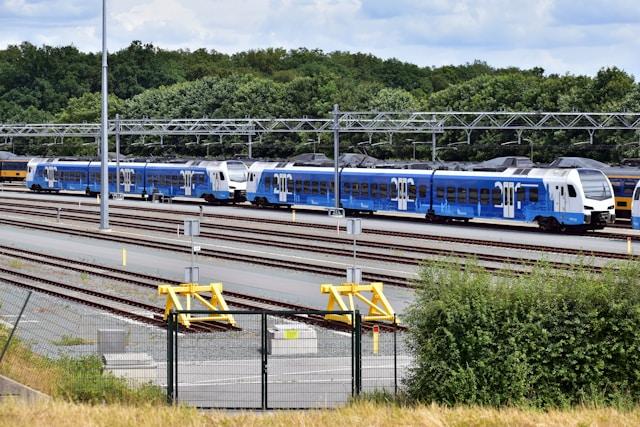
Multiple blue commuter trains at a modern rail yard with electrified infrastructure.

Partnerships

Cooperative Framework for Shared Corridor Operations

The success of our vision depends fundamentally on a cooperative framework with Union Pacific Railroad (UP). As the owner and operator of the primary rail infrastructure, their partnership ensures operational integrity, regulatory compliance, and safe coexistence between freight and passenger services.

1. Shared Corridors: Leveraging Underutilized Assets

Union Pacific’s Joint Line is a moderately used freight corridor with available capacity during commuter peak windows. Shared use allows us to utilize existing infrastructure under UP dispatch control, mirroring successful models in other U.S. regions.

Cost Savings

Substantial savings and reduced environmental impact by avoiding new construction.

Proven Safety

Access to well-maintained mainline infrastructure with proven safety records.

Efficient Operations

Time-separated operations between freight and passenger service to avoid congestion.

Minimal Disruption

Minimal land acquisition or disruption to local communities.

2. Regulatory Context

Any passenger service on a freight-owned corridor must comply with Federal Railroad Administration (FRA) and Surface Transportation Board (STB) regulations. The FRA’s Shared-Use Policy Framework encourages partnerships that expand passenger mobility without compromising freight efficiency.

Key Regulatory Steps

Trackage Rights Agreement (TRA)

A legal contract outlining access fees, maintenance, dispatch priorities, and liability.

FRA Safety Certification

Ensures all rolling stock, signals, and personnel meet national standards.

Environmental & Capacity Review

Verifies that shared use does not negatively affect freight efficiency or environmental compliance under NEPA.

3. Union Pacific’s Existing Infrastructure

Union Pacific already maintains robust infrastructure along this corridor that can accommodate additional passenger services with minimal upgrades.

Track and Sidings

Multiple sidings suitable for overtakes or meets between passenger and freight trains.

Signaling Systems

Centralized Traffic Control (CTC) for coordinated dispatching and predictable time-slot allocation.

Positive Train Control (PTC)

Fully PTC-compliant network providing a digital safety overlay to prevent collisions.

Maintenance Facilities

Potential sites for shared fueling and light maintenance operations.

4. Benefits to Union Pacific

A structured passenger partnership offers tangible advantages to Union Pacific beyond simple track usage fees.

Economic & Operational
  • Generates steady revenue through trackage-rights agreements.
  • Encourages public investment in corridor improvements.
Public Relations & ESG Value
  • Aligns with ESG commitments by supporting zero-emission transport.
  • Enhances corporate image as a sustainability partner.
  • Strengthens community goodwill.

Ready to Discuss Partnership Opportunities?

Connect with our team to explore how your region can benefit from shared corridor partnerships.

Contact Our Team